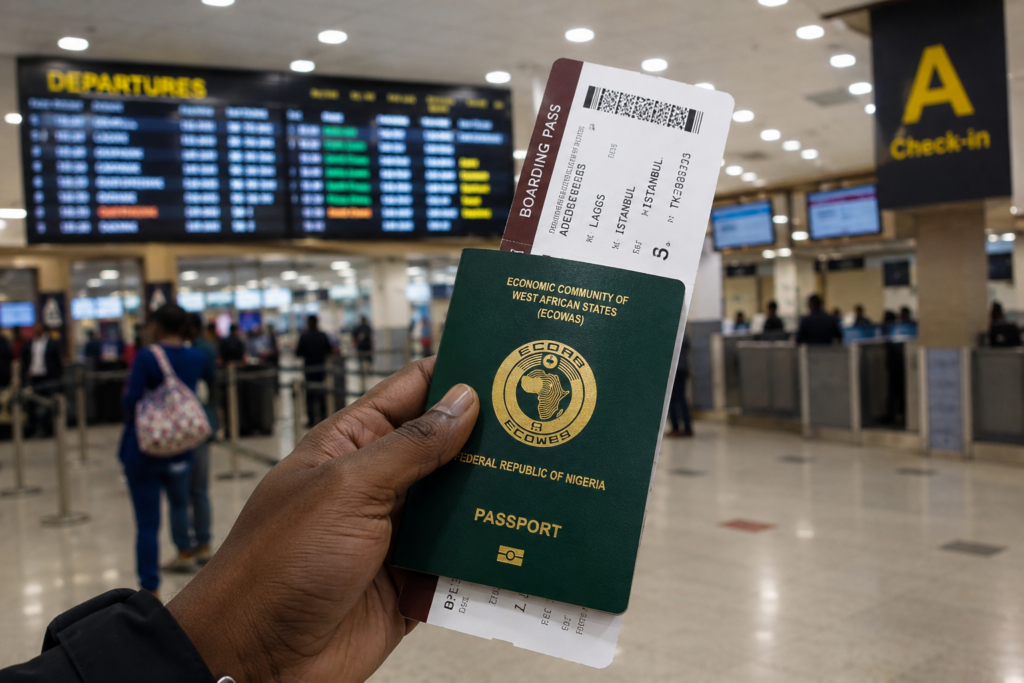

Worried your lack of travel history will get you rejected? Here’s what visa officers actually look at, and how to strengthen your application either way.
Travel History Explained: Does It Really Matter for Your Visa Application?
A first-time applicant, a young accountant who had never left Nigeria, came to us convinced her Schengen application was doomed before she’d even submitted it. “I have no travel history,” she said, almost apologetically, as if this alone disqualified her. Around the same time, we worked with another client who had visited four different countries over the years, yet still got refused for a straightforward tourist visa to a fifth. He was baffled, surely all that stamped-passport proof should have counted for something.
Both of them were operating on the same flawed assumption: that travel history is a simple scorecard, where more trips automatically mean a stronger application, and zero trips automatically mean a weaker one. The truth is more nuanced, and understanding it properly changes how you should actually prepare, regardless of which category you fall into.
This guide breaks down what travel history genuinely means to a visa officer, whether having none actually hurts you, and how to build a track record strategically if you’re just getting started.
Table of Contents
What “Travel History” Means in a Visa Application
Travel history refers to your documented record of previous international trips, the countries you’ve visited, the visas you’ve held, and critically, how you conducted yourself during those visits. This shows up in your passport stamps, previous visa approvals or refusals, and any immigration records tied to your name.
What visa officers actually check isn’t simply “how many countries has this person been to.” They’re looking at compliance patterns, did you leave when your visa expired, did you overstay, were you ever refused entry, and does your travel pattern make logical sense given your stated life circumstances.
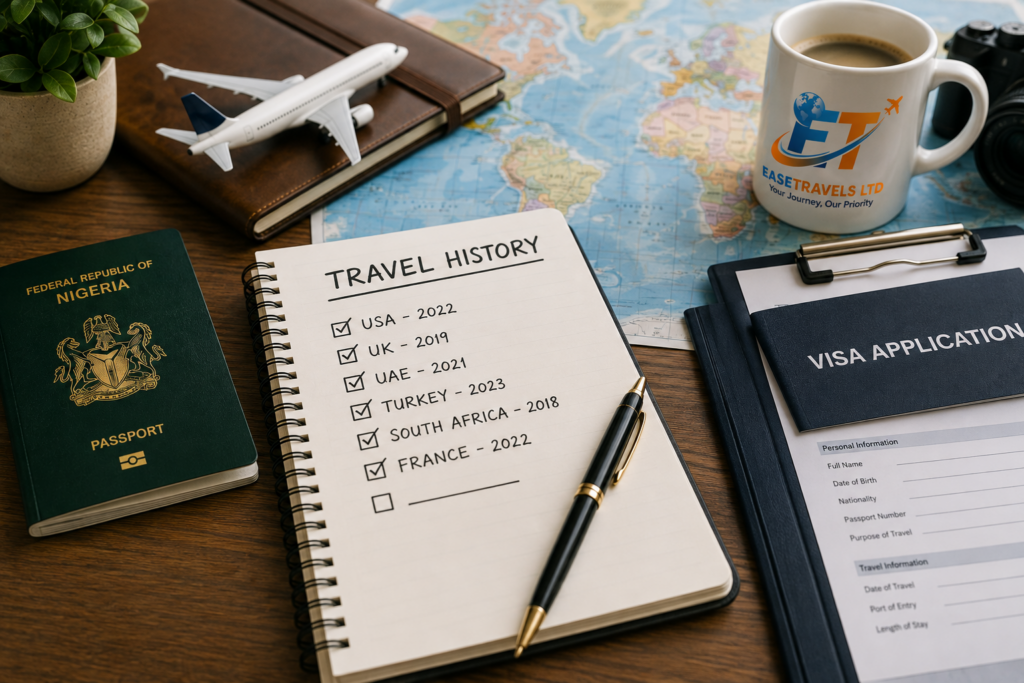
Does Having No Travel History Hurt You?
The Common Myth: “No History Equals Automatic Rejection”
This belief causes unnecessary anxiety for countless first-time Nigerian applicants, and it’s simply not accurate. Every experienced traveler was once a first-time applicant. Visa officers process first-time applications constantly, and having no travel history is not, on its own, a disqualifying factor.
The Reality: First-Time Applicants Are Approved Every Day
What matters is whether the rest of your application tells a convincing, consistent story. A first-time applicant with strong financial documentation, clear ties to Nigeria, and a specific, believable travel purpose is generally in a stronger position than a well-traveled applicant with sloppy, inconsistent documentation.
What Matters More When You Have No Travel History
Without a track record to lean on, other elements of your application carry more weight:
- Financial stability — consistent proof of funds becomes even more important
- Employment or business ties — clear evidence of your reasons to return
- A specific, well-documented travel purpose — vague plans are riskier without prior history to offset them
- A clean overall application — no inconsistencies, since there’s less established trust to fall back on
How Good Travel History Helps
Demonstrates a Track Record of Compliance
If your previous visas show you entered, stayed within your permitted duration, and left on time, this becomes genuinely valuable evidence that you’re a low-risk applicant. It’s not about where you’ve been, it’s about proving you follow the rules.
Builds Trust for Future Applications, Especially Similar “Tiers”
A clean travel history to countries with comparable visa scrutiny levels (say, Schengen countries, UK, and similar Western nations) tends to build cumulative trust. Officers reviewing your file can see a consistent pattern of responsible travel behavior across multiple jurisdictions.
Multiple-Entry Visas and How They Build Over Time
Many countries issue longer-validity, multiple-entry visas to applicants who’ve demonstrated compliance on previous shorter visas. This is one of the genuine, practical benefits of building travel history properly, your visa privileges tend to expand as your track record grows.
How Bad Travel History Hurts
Overstays
Remaining in a country beyond your visa’s permitted duration, even briefly, creates a lasting mark on your immigration record that future visa officers will see and weigh heavily.
Undisclosed Visa Refusals From Other Countries
Most visa applications explicitly ask about previous refusals from any country. Failing to disclose this, even if you assume it’s unrelated to your current application, is treated as a serious credibility issue if discovered, which happens more often than applicants expect due to shared immigration data systems.
Deportations or Entry Bans
These represent the most severe negative travel history and typically require significant time, and often professional guidance, to overcome in future applications, if they can be overcome at all within a reasonable timeframe.
Inconsistent or Suspicious Travel Patterns
A travel history showing repeated short visits to only one specific country under vague or shifting pretexts, particularly if that country has looser exit tracking, can itself raise questions rather than build confidence.
The “Visa Tiering” Strategy, Does It Actually Work?
The Common Advice
You’ve probably heard this before: build your travel history with “easier” countries first, then apply for harder destinations like the UK, Schengen countries, or the US once you have some travel record established.
Does This Genuinely Help?
To a meaningful degree, yes, but not because of some official system that ranks countries. It works because a clean record of compliant travel, to any country, genuinely does strengthen your credibility for future applications. A visa officer reviewing your file sees evidence you’ve traveled internationally before and returned home as expected, which reduces perceived risk regardless of which specific country that first trip was to.
Countries Good for Building Initial Travel History
- Visa-free or visa-on-arrival destinations (Ghana, Benin Republic, Rwanda) let you build a travel record without the pressure of a full visa application process
- Turkey or Egypt, with relatively accessible e-Visa systems, offer a reasonable next step once you have some initial history
- These trips should still be genuine, purposeful travel, not simply a checkbox exercise
The Nigerian Factor: What You Need to Know
1. How First-Time Applicants Should Compensate for No Travel History
If you’re applying for your first significant visa with no prior travel record, focus your energy on making every other part of your application exceptionally strong: clean, consistent financial documentation, a clear employment or business letter, and a specific, well-detailed travel itinerary. This isn’t a workaround, it’s simply good application preparation regardless of your travel background.
2. The Importance of Disclosing Prior Refusals Honestly
This connects directly to your travel history record. If you’ve been refused a visa before, always disclose it honestly on future applications, along with a brief explanation of what’s changed since then. Undisclosed refusals discovered later damage your credibility far more than the original refusal itself.
3. The Myth: “Getting a UK or US Visa First Makes Everything Else Easier”
This is only partially true, and it deserves nuance. Holding a UK or US visa, especially if used compliantly, can genuinely strengthen future applications to other countries, since it signals that a rigorous visa system already trusted you. However, it’s not a golden ticket, and pursuing a UK or US visa purely as a “strategy move” rather than genuine travel need often results in a weaker application than a well-prepared first-time request to an easier destination.
4. Agents Pushing Unnecessary “Starter Trip” Packages
Be cautious of agents specifically selling “visa history building” trip packages at inflated prices, positioning themselves as necessary intermediaries for something you could arrange yourself. Building genuine travel history doesn’t require a specialized paid service, it requires taking real trips for real purposes, compliantly, over time.
5. Real Example: How a Clean, Honest History Helped
That young accountant with zero travel history didn’t need a fabricated trip or a “strategy purchase” to strengthen her Schengen application. We helped her build exceptionally strong financial documentation and a clear, specific itinerary instead, and she was approved on her first attempt. Meanwhile, the well-traveled client who’d been refused had an undisclosed prior refusal from a different country that surfaced during review, which damaged his credibility far more than his lack of trips would have. Honesty and consistency, not volume of stamps, made the difference in both cases.
Quick Reference: Situation vs. Impact vs. Action
| Situation | Impact on Application | What to Do |
|---|---|---|
| No prior travel history | Neutral, not negative | Strengthen financial and employment documentation |
| Clean history with compliant visits | Positive | Reference it clearly, include previous visa copies if relevant |
| Overstay on a previous visa | Significant negative | Address honestly if asked; expect a harder path to approval |
| Undisclosed previous refusal | Severe negative if discovered | Always disclose honestly with a brief explanation |
| History limited to one country under vague purposes | Can raise suspicion | Diversify travel purpose and destinations if planning ahead |
Conclusion
Travel history matters, but not in the simplistic, scorecard way most people assume. It’s not about how many countries you’ve visited, it’s about whether your record, however long or short, shows honest, compliant behavior that a visa officer can trust. A first-time applicant with a clean, well-prepared file is often in a stronger position than a frequent traveler with an undisclosed refusal sitting quietly in their record.
Whether you’re applying for your very first visa or trying to understand how your existing travel record affects a new application, Contact Us Today and let’s review your specific situation together.
And if you know someone anxious about having “no travel history,” share this with them. Sometimes the reassurance that everyone starts somewhere is exactly what they need to move forward.
Safe travels.