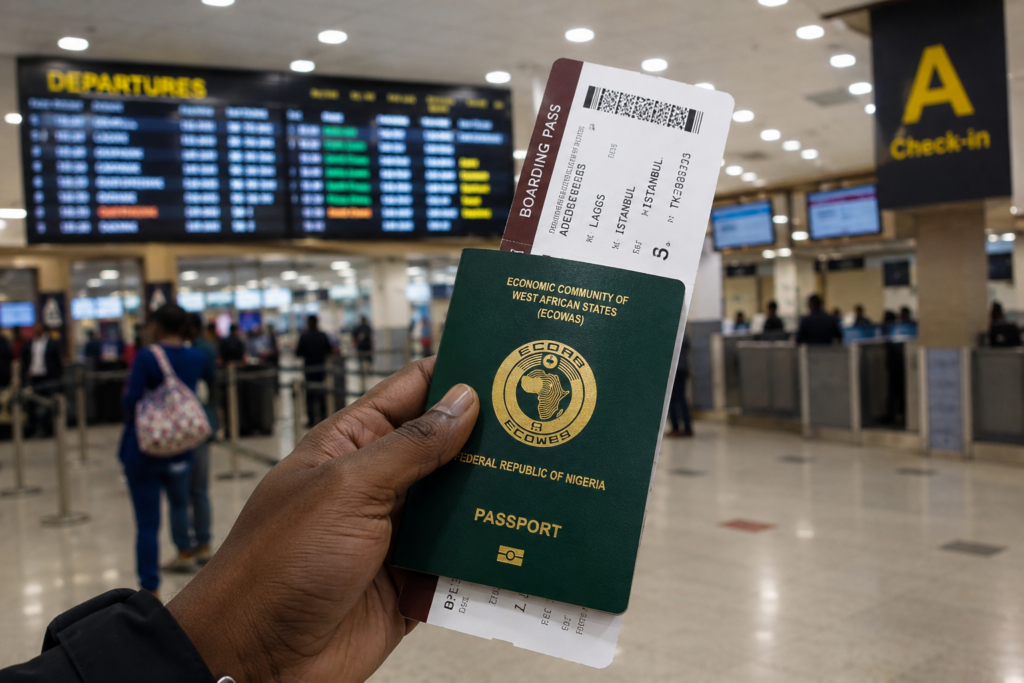

Confused about work visa vs tourist visa requirements? Here’s exactly what each one permits, the risks of mixing them up, and which one you actually need.
Work Visa vs Tourist Visa: Key Differences Every Nigerian Should Know
Table of Contents
A young graphic designer travelled to Canada on what she believed was a straightforward visit to her cousin. While there, her cousin introduced her to a small design job, nothing formal, just “helping out” for a few weeks in exchange for cash. She didn’t think much of it until she tried to return to Canada eighteen months later for a proper job offer, and her new work visa application was refused, citing a previous violation of her visitor status. Nobody had told her that working, even informally, while on a tourist visa counted as a serious immigration violation with lasting consequences.
This mix-up happens more often than people realize, and it rarely comes from bad intentions. It usually comes from not understanding that a work visa and a tourist visa aren’t interchangeable categories with soft boundaries, they’re legally distinct permissions, and crossing that line, even innocently, can follow you for years.
This guide breaks down exactly what each visa type permits, the real differences between them, and how to make sure you’re applying for the right one before you travel.

What a Tourist Visa Actually Permits
A tourist visa, sometimes called a visitor visa depending on the country, permits entry for leisure travel, visiting family or friends, short business meetings, or attending conferences. It does not permit any form of employment, paid or unpaid, formal or informal.
Typical Duration and Restrictions
Most tourist visas allow stays ranging from 30 days to 6 months, depending on the destination country and visa type. Some, like the UK Standard Visitor Visa, can be issued with longer validity (2, 5, or 10 years) but still restrict each individual visit to a maximum stay, typically 6 months.
What Happens If You Work While on a Tourist Visa
This is where people genuinely underestimate the consequences. Working while on a tourist visa, even for a short period or informally, is considered a violation of your visa conditions in virtually every country. Consequences can include:
- Immediate deportation if discovered
- A formal ban from re-entering the country, sometimes for several years
- A permanent mark on your immigration record that affects future visa applications, even to different countries
What a Work Visa Actually Permits
A work visa grants legal permission to be employed in a foreign country, typically tied to a specific employer, role, and duration. Unlike a tourist visa, it usually requires active sponsorship and a more extensive application process.
Sponsorship Requirements
Most work visa categories require an employer in the destination country to formally sponsor your application, which usually means:
- A confirmed job offer with a signed contract
- The employer demonstrating they couldn’t fill the role with a local candidate (in many countries)
- Proof that the employer is a legitimate, registered business capable of employing foreign workers
Duration, Renewal, and Pathways
Work visas typically align with your employment contract duration and can often be renewed as long as your employment continues. In many countries, an extended period on a valid work visa creates a pathway toward permanent residency, something a tourist visa never offers regardless of how long you visit or how many times you renew it.
Key Differences Side-by-Side
| Feature | Tourist Visa | Work Visa |
|---|---|---|
| Purpose | Leisure, family visits, short business trips | Formal employment |
| Sponsor required | No (self-funded or invited by host) | Yes (employer sponsorship, typically) |
| Duration | 30 days – 6 months per visit | Tied to employment contract, often renewable |
| Can you work? | No, under any circumstance | Yes, within your specified role |
| Documentation focus | Proof of funds, ties to home country | Job offer, employer sponsorship, qualifications |
| Pathway to residency | Generally none | Often available after extended employment |
| Processing complexity | Moderate | Higher, involves employer-side documentation |
Which One Do You Actually Need?
Scenario: Attending a Business Conference
You need a tourist visa (or its business-visit equivalent), even if the trip is work-related, as long as you’re not being paid by a company in that country or taking up employment there.
Scenario: Accepting a Confirmed Job Offer Abroad
You need a work visa, sponsored by your new employer, before you can legally begin employment in that country.
Scenario: Visiting Family Who Also Mention Informal Work Opportunities
This is the trickiest scenario, and the one that catches the most Nigerians off guard. If you enter on a tourist visa and take on any paid work, formal or casual, you’ve violated your visa terms, regardless of how informal or well-intentioned the arrangement feels.
Why “I’ll Figure It Out When I Get There” Is a Risky Approach
Immigration authorities in most countries treat visa category violations seriously, precisely because the system relies on people being honest about their intentions before entry. Deciding to “just see what happens” once you’re already there isn’t a loophole, it’s the exact behavior visa enforcement is designed to catch.
Consequences of Using the Wrong Visa Type
The graphic designer from our opening story faced a work visa refusal eighteen months later, directly tied to her earlier informal work on a tourist visa. Her cousin, who arranged the informal job, faced no consequences since he wasn’t the one whose visa status was violated. This asymmetry is important: the person who breaks visa terms bears the entire consequence, even when someone else suggested or arranged the arrangement.
Common consequences include:
- Deportation if discovered while still in the country
- Multi-year entry bans, often 5–10 years depending on the country and severity
- Future visa refusals, since most countries ask directly about previous violations, and lying about this is treated as a separate, serious offense
- Difficulty with other countries’ visa applications, since some immigration systems share violation histories internationally
The Nigerian Factor: What Makes This Confusing for Us Specifically
1. The “Just Visit and Find Work” Advice From Abroad
This is one of the most common and dangerous pieces of advice circulating among Nigerians with relatives abroad. Well-meaning family members sometimes suggest visiting on a tourist visa and “figuring out work once you’re there,” not realizing this advice sets up a serious immigration violation. If you genuinely want to work abroad, the correct path is securing a job offer first and applying for the appropriate work visa, even though this takes longer and requires more preparation.
2. Different Financial Documentation Expectations
A tourist visa application focuses heavily on your proof of funds and ties to Nigeria, showing you can afford your trip and have reason to return. A work visa application shifts focus almost entirely to your employer’s sponsorship and your professional qualifications, with less emphasis on your personal bank statements. Understanding this difference helps you prepare the right documents for the right application.
3. Common Scam: Agents Promising “Work Visas” That Are Actually Tourist Visas
This is a growing and particularly damaging scam targeting Nigerians desperate for opportunities abroad. Some agents collect substantial fees promising a work visa, then simply process a tourist visa instead, leaving the applicant to either work illegally (risking everything above) or arrive abroad with no actual job prospects and no legal right to seek employment. Always verify that your visa category matches what you were promised before paying any agent, and confirm directly with the embassy or consulate what visa type has actually been issued.
4. Embassy and Processing Realities: Lagos vs. Abuja
Work visa applications often require more employer-side documentation exchange, which can extend processing time regardless of whether you apply through Lagos or Abuja. Tourist visa processing tends to be more standardized and faster across both locations, though Lagos generally has more frequent VFS Global appointment slots given higher application volume for most destination countries.
Quick Reference: Scenario vs. Correct Visa Type
| Scenario | Correct Visa Type | Why |
|---|---|---|
| Attending a conference or business meeting | Tourist visa (business visit category) | No employment or payment from a foreign company involved |
| Confirmed job offer from a foreign employer | Work visa | Requires legal employment authorization |
| Visiting family with informal work mentioned | Tourist visa only — decline any work offers | Working violates tourist visa terms regardless of formality |
| Relocating permanently for employment | Work visa, often leading to residency pathway | Tourist visa offers no residency pathway |
| Short-term training or internship abroad | Depends on destination — often a specific training visa category, not tourist or standard work visa | Requires checking destination-specific categories |
Conclusion
Understanding the difference between a work visa and a tourist visa isn’t just bureaucratic detail, it’s the difference between a smooth international experience and years of visa complications that follow you across borders. The rules exist for a reason, and the consequences of ignoring them fall entirely on the traveler, not on whoever suggested cutting corners.
If you’re unsure which visa category actually applies to your specific situation, CONTACT US Today before you apply for anything, it’s a five-minute conversation that can save you years of complications.
And if you know someone considering the “visit first, figure out work later” approach, share this with them. It’s advice that sounds harmless until it isn’t.
Safe travels.